I want to invite you to a little house on a forgotten street between Ms. Davis and The Muses. It was a seemingly ordinary place that became something more than a childhood memory.
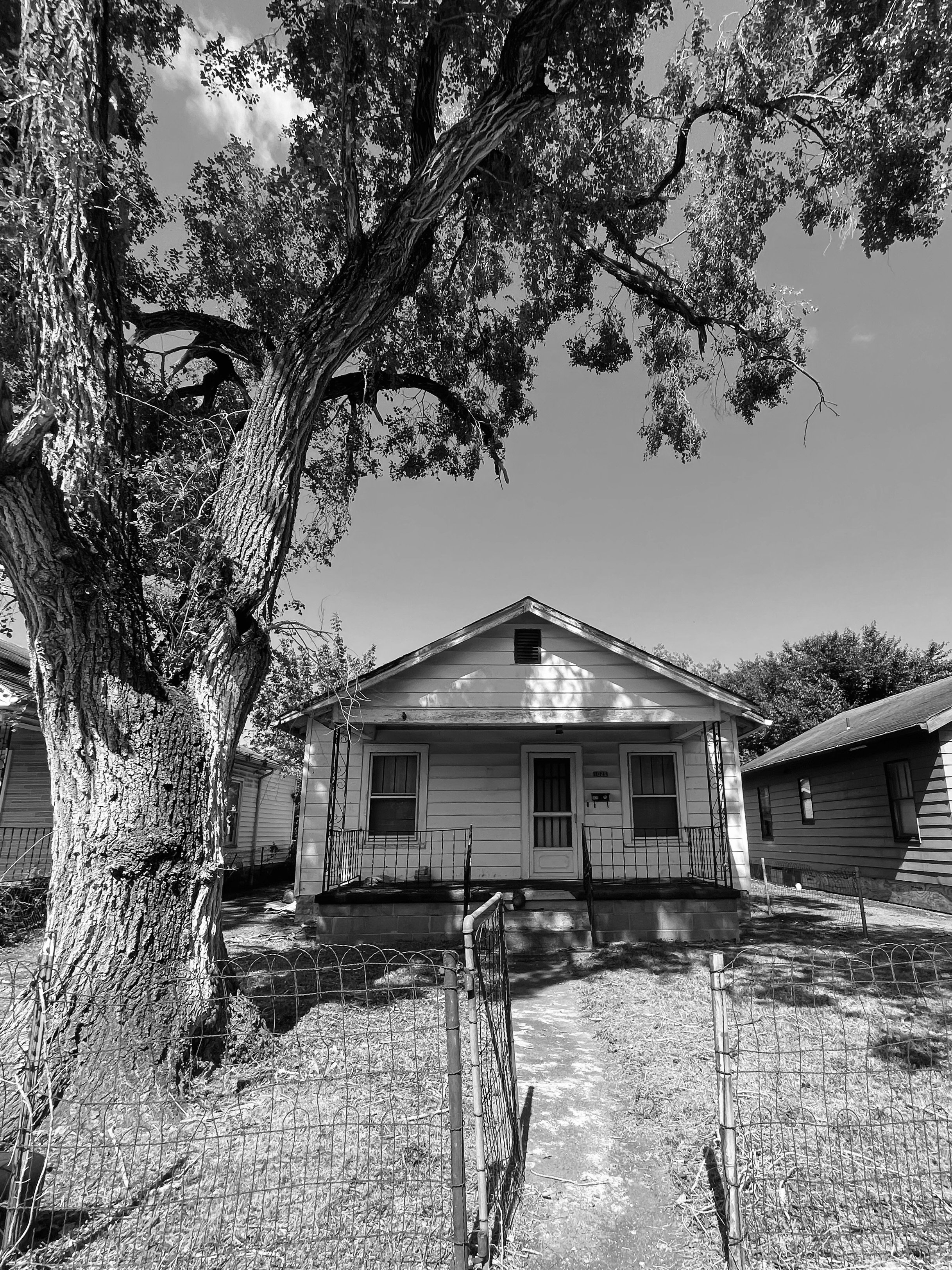
What remains of Hattie’s House, East Third Street, Maysville, KY (2023)
Hattie’s Hands
You’d hear the rattle of the old window unit air conditioner that generously watered the orange tiger lilies off the porch, and the screech of the screen door opening and slamming behind us. The red carpet welcomed you in, and the wooden paneling held the morning sun’s warmth through layers of thin, cream colored valances. Her bed was always made because she slept on the couch near the phone, her blankets folded at the back end, and you could smell the kitchen before you ever saw it.
Mornings at Hattie’s were the smell of biscuits and whatever she had made that morning, typically sausage patties. The smell of bacon often perfumed the air and was an all-day treat when tomatoes were in season; whatever she had made always rested on aluminum foil until nothing was left.
The TV would be blaring, and the smoke from her Camel cigarette would mellow the air, marrying with humid early summer dew. The back door would be cracked open to let the air in, and you could see the lines of tobacco smoke smudging her wrinkled and sun-loved hands, sifting through the battered screen door.
There was always so much to uncover, and if we weren’t busy with our hands digging for history and asking questions, she’d lay out flour and water, let us practice our own biscuits, and we never got tired of it. Her phone cord stretched through nearly three rooms so she could sit in her favorite seat at the kitchen table, flanking the stove and the door.
Hattie’s windows were all painted shut, and the single panes made it easy to catch all that young ears were not meant to hear: “In or out! You’re letting the flies in.”
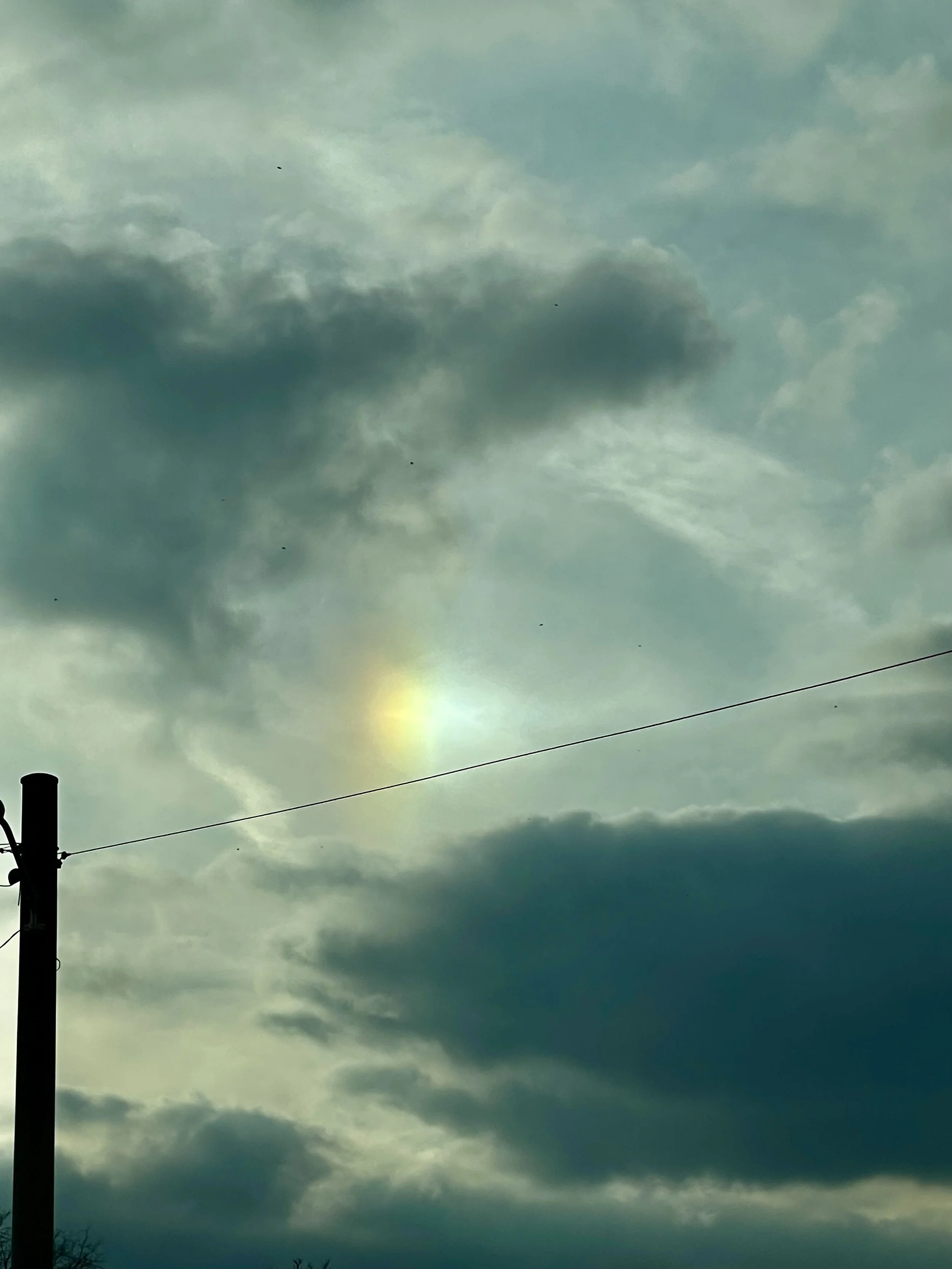
I’d walk barefoot through the tiny backyard, past the white garage where my mom taught me to strip wood and paint, and sit under what seemed like a big mimosa tree to my small body. That little tree had to have been cut down several times in its life, but it would always come back, and as kids, we celebrated its resilience. I’d grab handfuls of wilted Rose of Sharon blossoms and crush the petals until what remained was a deep burgundy dye.
Hattie’s hands knew the flyswatter well; she’d let me know when I yelled and screamed not to spank me with the end that had crushed the flies, so she gave me the metal end.
Her hands revealed lessons that I’d never know would mean so much.
Her hands were how she loved us, in the kitchen, at the table, and in the moments that didn’t feel like love.
From learning not to make ashtray fires in the house to learning not to dig through other people’s drawers, there were lessons I didn’t understand until later. She was my Mamaw’s aunt, my great grandma’s sister, born on the same day as my mom, and she was our lifeline.
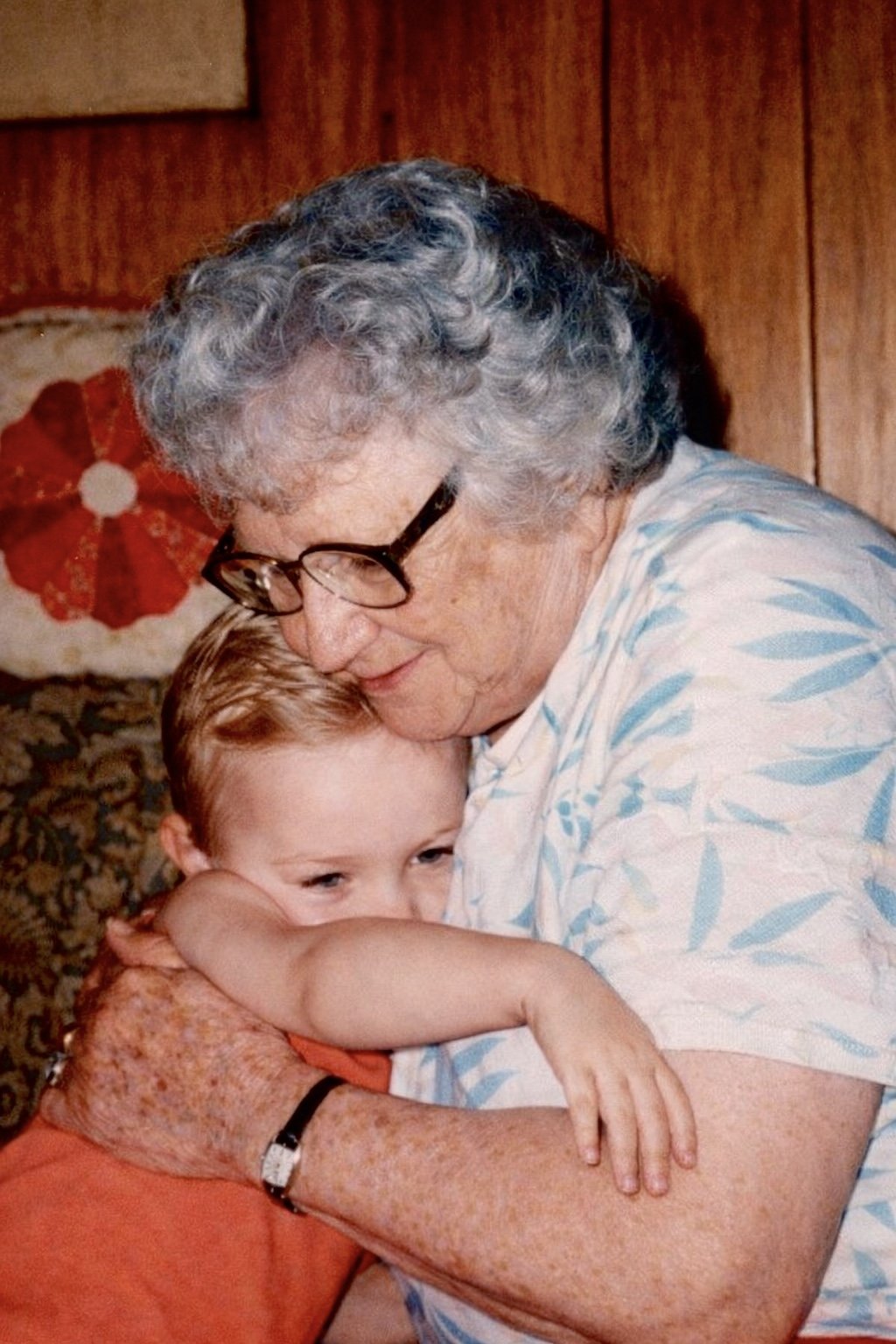
Hattie and me (1990)
The house Hattie lived in hid secrets, from the wonder of what was in the storage above the garage rafters that belonged to her late husband, Paul, to the KET episode that led me to tell my younger brother there might be time capsules in the walls. We both tasted plaster.
We’d crank the Victrola to see if we could make Whipped Cream & Other Delights play, since we were enamored with the album art. All of Hattie’s leftovers were kept in those empty containers.
After cranking too hard, Hattie would hold the broken pieces of the Victrola and say, “I can’t have anything from you kids.” We didn’t know we had broken something so valuable to her. And in her disappointment, her hands were soft and loving. She dared, at times, to even stop and share the history and her memory.
She was no stranger to the tin box of photos, telling us who everyone was and the places they grew up, and their stories. My great grandma was the same, they had such pride in their home-place, and we could only imagine what those spaces must have been like.
The sound of the railroad tracks would cause us to shut the door and sit too close to the TV when Mom got off work.
Hattie would open up her brown pleather cigarette case and hand my mom a cigarette.
Mom never came to pick us up in a rush; most times, she’d bring a fried chicken dinner. Hattie would always say the skin and crust were the best part, and she was right, as I would typically abandon anything on the chicken leg attached too deeply to the bone.
My mom would sit across the table next to Mamaw Mason’s sugar bowl and Browning’s factory calendars and talk until 60 Minutes came on.
We never left her house without her arms wrapped around us and a tap on the back. I can still smell the leaves of the Siberian elm in her front yard in the fall, and see the money plants in my peripheral as I go down the concrete steps and into the back of Mom’s pea green Cutlass Supreme.
How I’d take back all of those waits at the railroad crossings by her house.
How I’d love a long train so I could take a hard left down the alley her house was on, sit on the swing with her, drink tea, and talk about the potato vines.
© 2026 Phillip Nathaniel Saunders. All rights reserved. No part of this work may be reproduced, distributed, or transmitted in any form without prior written permission of the author.